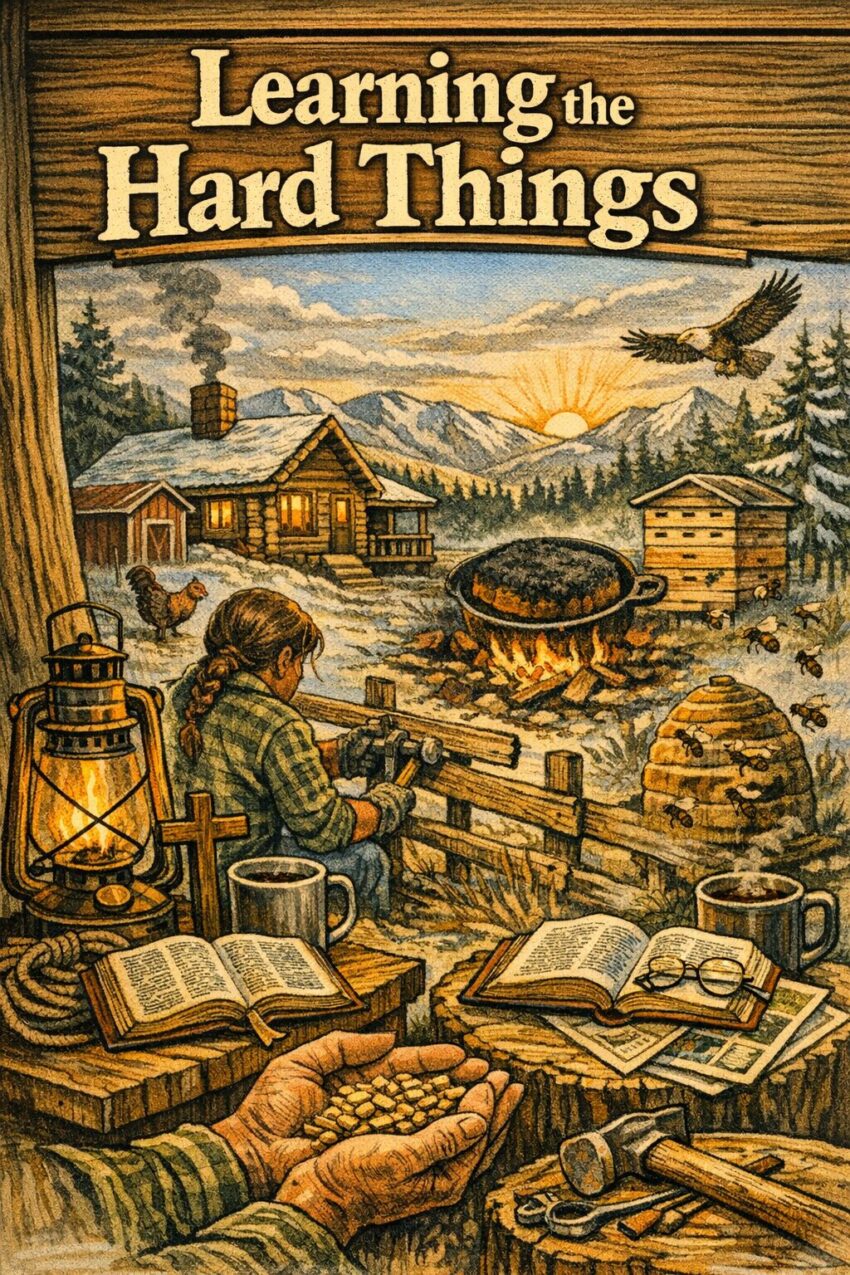
Introduction: The Courage to Learn Anyway
There’s a moment every woman who works close to the land knows well—the pause before trying something new. The chainsaw hums, the dough refuses to rise, the fence line stretches farther than you thought. You feel the weight of not knowing, and the whisper of doubt says, you can’t. But then something deeper answers, I’ll learn it anyway.
Learning the hard things isn’t about proving strength; it’s about discovering grace in the process. It is about finding God’s fingerprints in the lessons that take time, patience, and humility. It’s about courage—the kind that grows quietly in the doing.
The Beauty of Not Knowing Yet
There’s freedom in admitting you don’t know something. It opens the door to curiosity, to growth, to faith. When you stop pretending you have it all figured out, you make space for God to teach you.
Every skill learned on the homestead—whether it’s mending fences, baking bread, or starting seeds—begins with not knowing. The first try is rarely perfect. But each attempt becomes a prayer: Lord, help me learn this.
Learning hard things reminds us that failure isn’t the opposite of success—it’s the soil success grows in.
Grit and Grace in the Process
Grit gets you started. Grace keeps you going. Grit says, I’ll try again. Grace says, You don’t have to do it alone.
When you live close to the land, you learn that both are necessary. You need grit to face the hard things—the broken tools, the long winters, the steep learning curves. But you need grace to remember that your worth isn’t measured by how quickly you master them.
God doesn’t ask for perfection. He asks for perseverance.
The Lessons Hidden in the Work
Every hard thing teaches something deeper:
- Chainsaws and courage: Strength isn’t loud; it’s steady.
- Gardens and patience: Growth takes time, and weeds are part of the process.
- Bread and faith: Rising happens unseen, but it’s real.
- Repairs and resilience: What breaks can be mended—with care and wisdom.
These lessons shape more than skill—they shape character. They remind you that learning is holy work.
The Role of Faith in Learning
Faith transforms frustration into formation. It turns obstacles into opportunities to trust.
When you pray over the things you’re learning, you invite God into the process. You begin to see His hand in the timing, the outcomes, and even the mistakes.
Faith says, I don’t know how yet, but I know Who does.
That’s the heart of learning the hard things—it’s not about mastering the skill; it’s about deepening the relationship.
Encouragement for the Woman Who’s Still Learning
If you’re standing at the edge of something new—something that scares you a little—take heart. You don’t have to be fearless to begin. You just have to be willing.
Start small. Ask questions. Try again. Laugh at the mistakes. Celebrate the progress. And remember: every skill you learn becomes a testimony of God’s faithfulness.
You’re not just learning how to do hard things—you’re learning how to trust Him more deeply through them.
Conclusion: The Quiet Triumph
Learning the hard things is a lifelong rhythm. It’s the sound of courage meeting grace, of effort meeting faith.
It’s the woman who picks up the chainsaw, kneads the dough, plants the seed, and says, I’ll learn it anyway.
Because she knows that every hard thing learned becomes a story of God’s strength made visible in her own hands.